[Spoilers] La La Land [Analysis & Review]
Went to see it on opening day!!
Spoilers ahead!
Going to write up the analysis and the review of La La Land!!
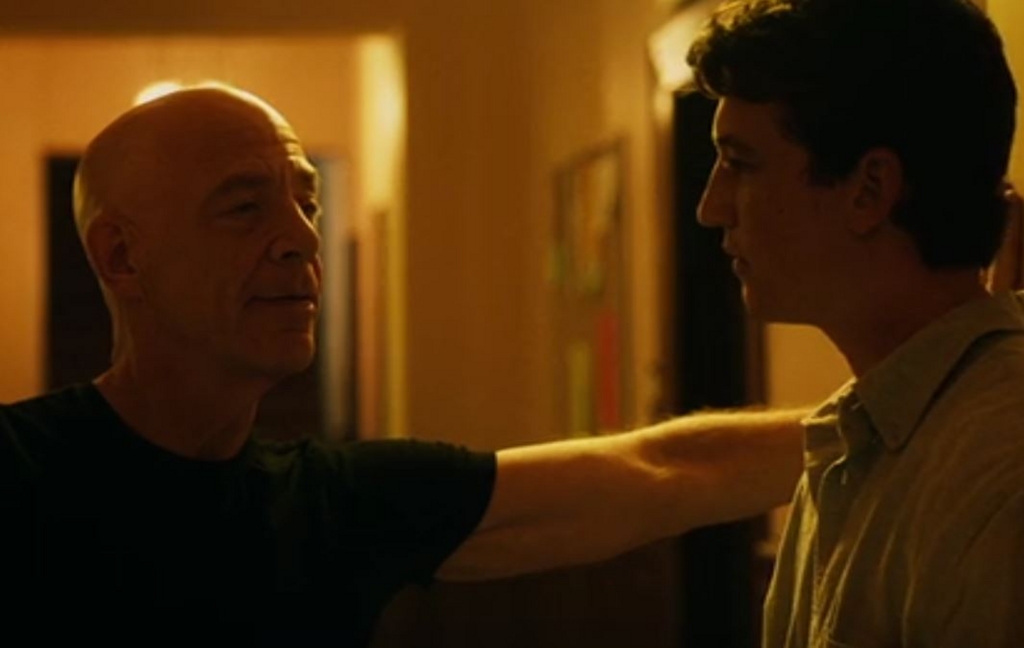
Said this in the Whiplash post as well, but the three films of a lifetime are now settled. Whiplash, La La Land and Fight Club.
I love Whiplash so much that having the same man make a film the Academy nominated this heavily is genuinely wonderful!!
✨The 89th #AcademyAwards® — six wins, more than any other film✨
Directing, Actress in a Leading Role (Emma Stone), Cinematography, Production Design, Original Score and Original Song (City of Stars). Six awards! At 32, Damien Chazelle becomes the youngest winner in history, breaking a record that had stood for 85 years🎊 #LaLaLand pic.twitter.com/158W4gqEXQ— La La Land, official Japanese account (@lalaland0224) 27 February 2017
First of all, congratulations on the Academy Awards for Actress in a Leading Role, Directing, Original Song, Original Score, Cinematography and Production Design!! Missing out on Best Picture was a shame, but there is no question this is a film that has been received brilliantly. Want to see its rival Moonlight soon too.
It felt like a film in three parts to me, so that is how this post is laid out!
Contents
Part One
A Los Angeles freeway in winter.
The masterstroke here is opening on grainy old-fashioned footage and then cutting to that gridlocked freeway with everyone singing the song below.
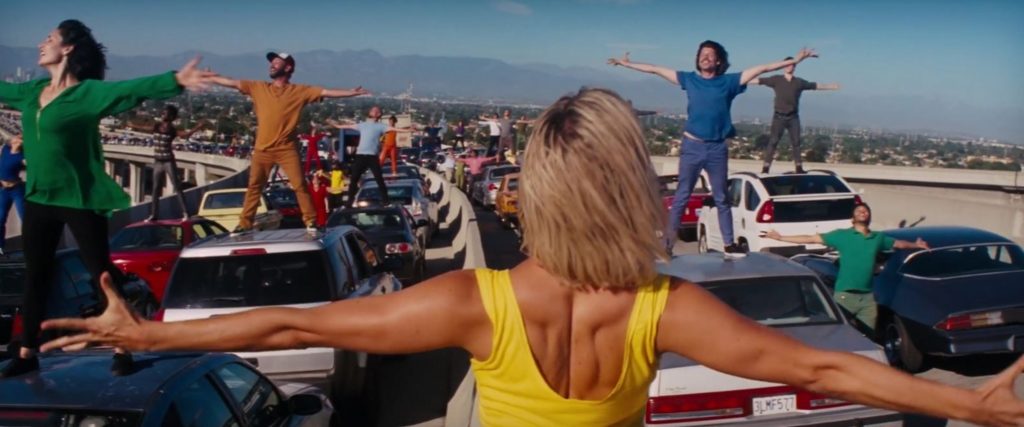
Straight in at the deep end, but telling the audience up front — ah, this is a full-blooded musical — pulls them in effortlessly. Overwhelming. Wonderful song, this. Lavish, bright, puts a charge in you.
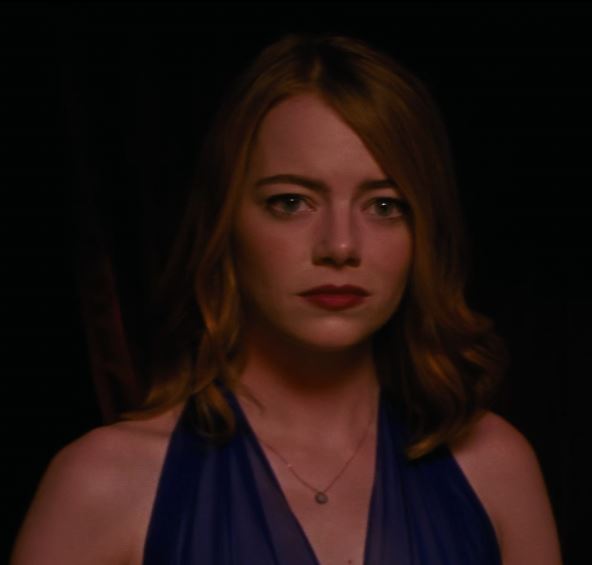
The song ends and Mia, played by Emma Stone, appears. Mia is a struggling actress. Probably without a single decent credit to her name. Given the Los Angeles setting it was easy to read that she came to the city dreaming of acting and now spends her days failing audition after audition.
The music that plays when she turns up is another lovely one— great rhythm to move to, been listening to it constantly lately lol
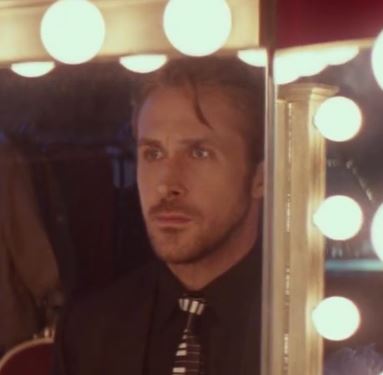
Seb, played by Ryan Gosling, dreams of becoming a great jazz pianist. But jazz is already out of date and the only people listening are the older generation, and he cannot quite face that, so he spends his time complaining about a world that treats jazz carelessly.
When we meet him he is working as a hired pianist at a restaurant.
And his playing there is wonderful... except he plays something other than what the restaurant asked for, and gets fired.
Which is why he is so rude to Mia, the one person who was actually listening.
Jazz, then. Clear as day that this director loves it just as much as he did in Whiplash. And hang on — the owner of that restaurant is J.K. Simmons, the teacher from Whiplash!!!
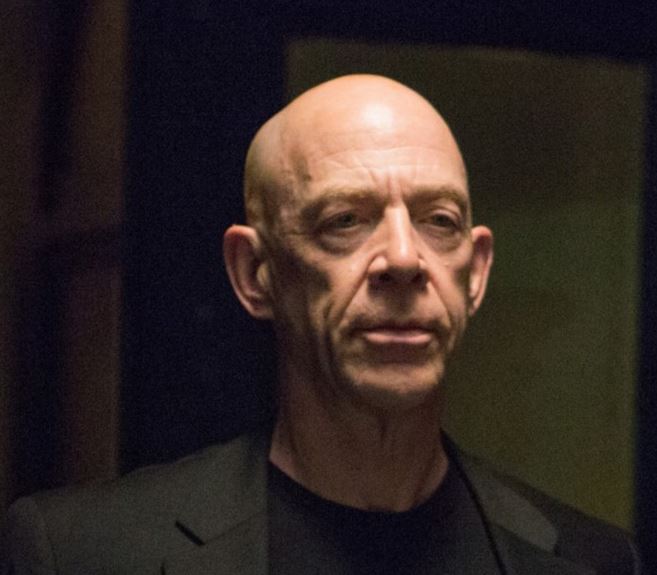
Seems the Whiplash connection brought him back. Not a big role, but the presence is enormous, and slipping in a wink that anyone who knows Whiplash will love is a joy. You can feel how much he values his own work.
La La Land starts in a Los Angeles winter and moves on through spring, summer and autumn.
Around the spring section I had a feeling this was going to end in autumn.
Mia and Seb meet in the worst possible way, but coincidence keeps throwing them together, and the conversation once they warm to each other plays out over the song below.
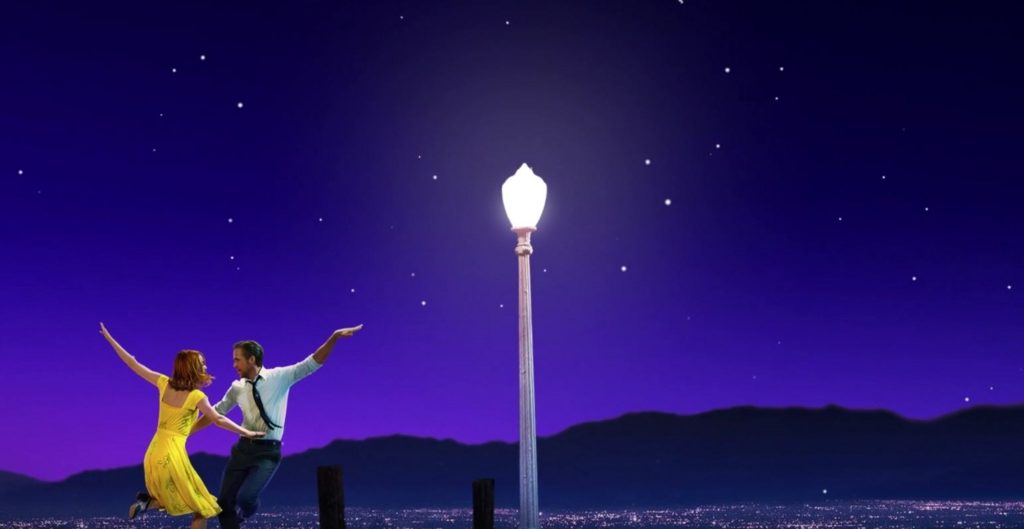
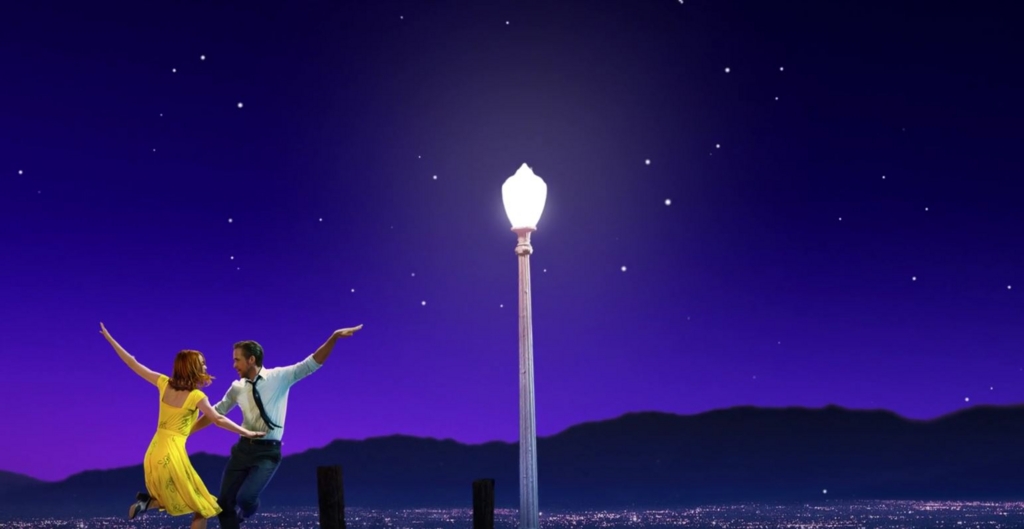
So this is where that signature pose lands! Assumed it would come much later!
The song, the lyrics and the dancing are so passionate the heart lifts, and you think, ah, these two are perfect for each other — and then the bombshell that Mia has a boyfriend… where can this possibly go…
Spoiling it: Mia is honest with herself, ends things with the boyfriend, and shares a proper kiss with Seb.
That is Part One.
The look on Seb’s face as he falls for Mia bit by bit is so tender I cried.
Saying with his eyes rather than his lines that he loves her and cannot help adoring her. Astonishing. Nothing but respect. It really lands.
And there is more!!
Right the way through, the film shoots on wide-angle lenses! Cramped spaces look wide, and it starts to feel like peering into the world of the film through a keyhole
It won Cinematography as well, so it is obvious this lifted the film to another level.
Part Two
Summer.
Mia is flat out preparing a one-woman show from her own script.
Seb is hunting for a name for the club he wants to open.
Living together and cheering each other’s dream on, the two of them are at the peak of happiness.
They start going out after that kiss at Griffith Observatory. And things are going very well indeed. The two of them dating around Los Angeles looked so happy.
Seb leaning on the car horn forever every time he comes to pick Mia up was great too. Never guessed it was setting something up…
But Mia’s mother points out that Seb has no steady job. Mia herself doesn’t seem to mind. Seb does. So he decides to join the band that Keith, an old bandmate from his student days played by John Legend, keeps offering him.
Keith’s band is a jazz band, but in practice it is jazz remodelled for a young audience with the tradition thrown out entirely. Seb tells himself there is no other way to make a living, and settles into playing it night after night, grudgingly.
Hard to blame Seb for changing his dream for the sake of a living — which means for Mia. What this “change” does to the two of them is the thing to watch.
Autumn.
Seb’s band is a huge success. Playing all over the country, he is barely home. Mia never expected the band to take off, and on top of that she assumed the whole thing was to raise money for the club. Over a rare dinner at home she asks, “how many more weeks of the band?” Seb answers, “could be years.” That sets off an enormous fight. In the end Mia walks out.
The night of Mia’s one-woman show. Only about ten people have turned up, and Seb isn’t there because he is shooting with the band. Mia finally gets through it and heads back to the dressing room. From somewhere she hears “that was a terrible show,” and that is where she gives up on the dream. As she tries to leave the theatre in pieces, there is Seb, who has realised his mistake.
But nothing he says can reach the Mia of that moment. She tells him flatly that she is going home and they should break up, and drives away.
Mia loves Seb too, and that is exactly why she could not stand him changing his dream and playing music he hates for her. There is something here that sets them apart from an ordinary couple, which is that both of them are artists. Making and expressing what you love is the highest thing there is to them, so Mia must have felt all the more guilty about Seb. And on the other side, Seb is doing it because he loves her — a contradiction, the hedgehog’s dilemma, whatever you want to call it. Genuinely sad.
And the part where Mia, who disliked jazz, came to love it thanks to Seb was so good as well…
That reaction to the show must have cut deep too. A thoughtless “that was a terrible show” would have felt to her like a rejection of her entire life. She had poured everything she loves and everything she has lived through into that show. Having been there myself, it was hard to sit through.
Then there is the exchange between the two of them at that moment.
Yes.
It is set against the way they first met at the restaurant, surely. Beautiful. Such a well-built film.
On to the climax.
Part Three
A few days later a call for Mia comes through to Seb’s phone.
It turns out to be an offer from a casting office that was moved by her one-woman show.
Mia, meanwhile, is back at her parents’ house. She has given up the acting dream and is wondering whether to go back to university and take up law — and then a car horn of insane length sounds outside. Yes. Seb.
Mia hears about the offer and refuses it, saying her dream is over. But Seb, in a residential street in the middle of the night, shouts her back into life and declares he will come for her tomorrow.
He arrives the next day and Mia is nowhere. Just as he is about to leave, she appears. She had gone to buy coffee.
At the audition the producer asks her to perform anything she likes.
The audition ends.
The two of them move on to Griffith Observatory
Once shooting starts they physically will not be able to see each other, so they leave the relationship open and decide to let it go where it goes.
“I’m always going to love you”
Mia says it out loud
Maybe a little embarrassed
Mia: “This view isn’t all that great, is it”
— meaning the view looking up at Griffith Observatory
Seb: “You’re right”
And here the two of them part.
Winter, five years later.
Mia is a huge star with a comfortable family. Her husband is not Seb, but she is happy.
She walks the evening streets with her husband.
They find a lovely-looking place and go in, and the name of it is “Seb’s
Carrying a certain feeling, she moves further in, and there is Seb. Yes. Seb has made his dream real, playing as much jazz as he likes in his own club.
Seb spots Mia and plays their song.
The piano has turned into a vast orchestra before anyone notices.
And what is on screen turns into what if the two of them had married.
The music ends and Mia leaves the club with her husband.
For one instant their eyes meet.
And the story ends.
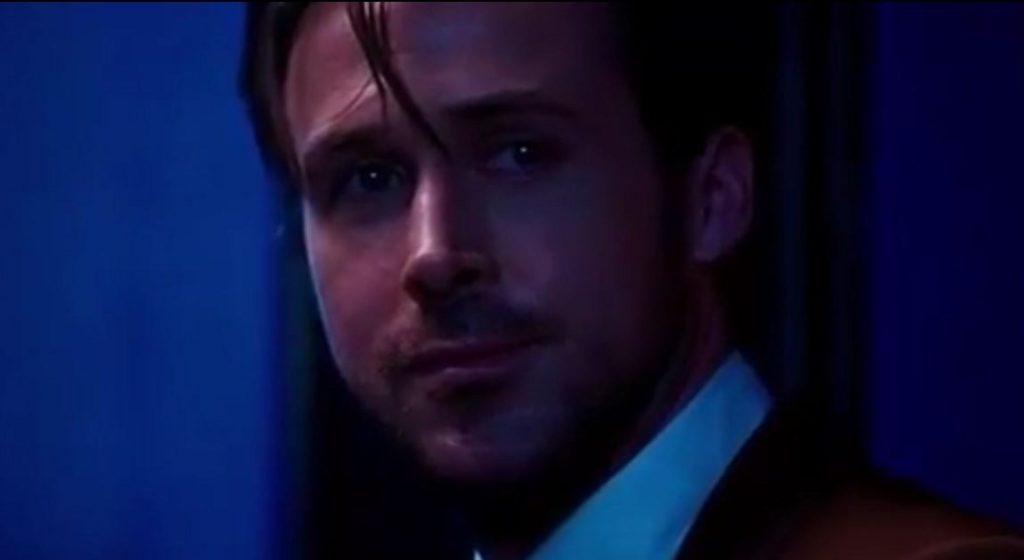
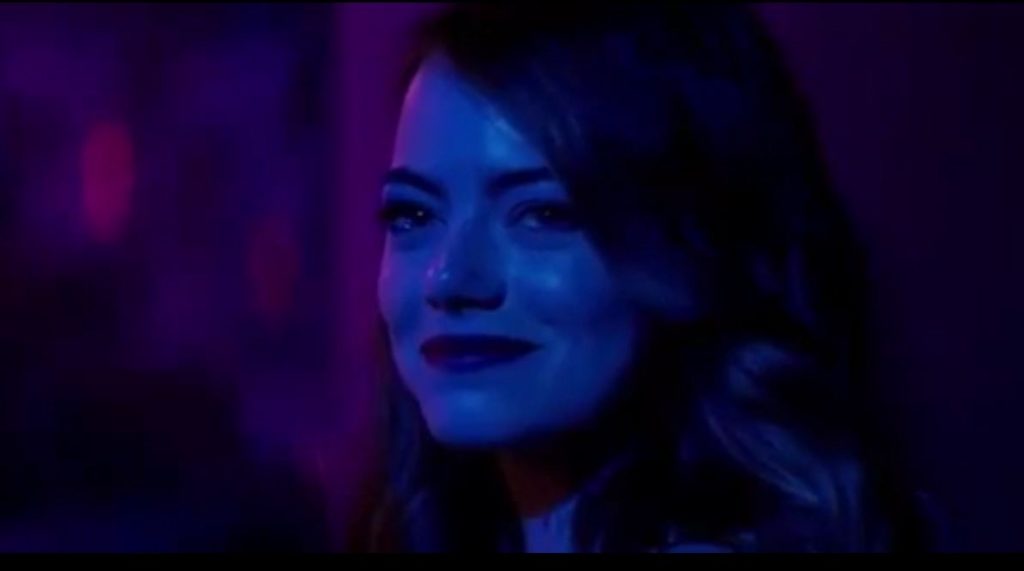
Ahh. Painful.
After a break-up like that I assumed it was over — and then the offer arrives.
The producer was drawn in by Mia giving absolutely everything of herself.
The thing worth holding on to here is that values change. One audience member called her performance terrible. The producer did not.
There is a contrast in that between an audience member who knows little about acting and a producer who does it for a living, and it is tempting to read a message from the director in it: the more you learn about something, the more what you can see of it changes lol On the surface this is a sad love story, but there is also a thread about what an artist is, and about the pull of the past. This film must look completely different to an older viewer with a life behind them than it does to someone young.
And Mia, who had been getting nowhere, gets her chance thanks to the producer. That part feels like the director’s own bit of comfort for every artist out there working hard and getting nothing back.
Seb rallying Mia was great too. Fired up! Fired up, Seb!! New-found respect!!!
Never thought a car horn could make me this happy!!!
That audition scene was so good—
Want to see it again and write about it properly.
Right. Griffith Observatory.
This bit.
The two of them telling each other the truth.
Mia’s eyes looking at Seb with such affection got me.
But one of the things this film wants to say might be sitting right here.
Namely Mia’s line about the view looking up at Griffith Observatory not being all that beautiful.
Meaning: reality sometimes does not work out
That is what it feels like it is saying. They must have sensed it. That having the dream and the marriage both was not going to happen.
They know reality is not that kind. Seb has changed his dream and compromised, and Mia is still chasing hers with no idea whether she will pass an audition.
So they surely knew that if the dreams came true, marriage would be hard.
Five years on, then.
Mia’s success is spectacular. She really worked for it.
Seb’s club is packed as well, which is a delight.
Some in the audience might feel Seb waited for her and it is cruel of her to have married.
But that reading is dull. Life is like that. Deciding it is unfair that Mia has a family and Seb does not is banal and shallow. That is not the kind of film this is.
That bitter ending is exactly what makes the “if” footage woven through Seb’s playing, the version where they married, work as well as it does. An incomplete ending is what lets it express a perfect one.
The “if” sequence in particular has the Empire State Building and a frantic 1920s glamour nobody sees any more.
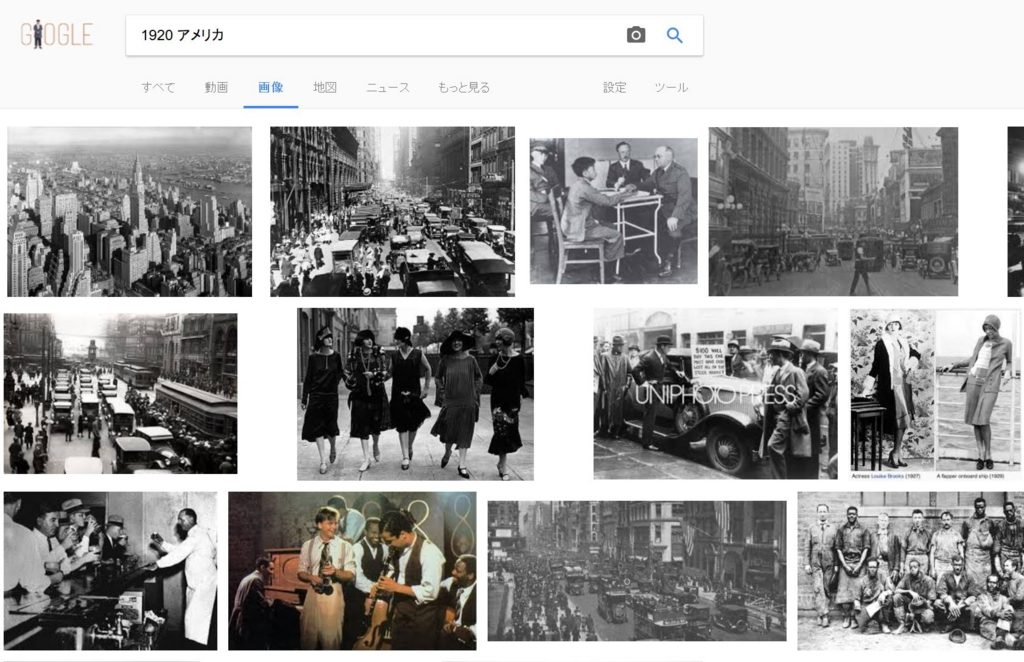
From the very opening there is something old-fashioned running through it. And as the comparison video below makes clear, it is paying homage to the musicals of the past, Singin’ in the Rain and West Side Story.
But that nostalgia and longing, that “things used to be better,” that urge to go back — the same thing Crayon Shin-chan: The Adult Empire Strikes Back is about — is in this film too.
Of course this lands in America. Recent years have not been an era with the same room to breathe as the 1920s. This film soothes that anxiety, just a little, with big showy musical numbers and nostalgic jazz, and that is how it has the public and the critics in its grip.
Enough of the vaguely political stuff. In the end there is respect and joy in the fact of the dreams coming true and in the sheer grit behind them, and on the other side the romance ending sadly is simply sad. Love that “if” footage.
That final look between them — sad, tender, grown-up, genuinely beautiful. Struck right through.
Seb’s “one, two, one, two, three” felt like the curtain going up on a restart in life, and it was wonderful.
And doesn’t this composition look familiar?
Yes — the final scene of Whiplash.
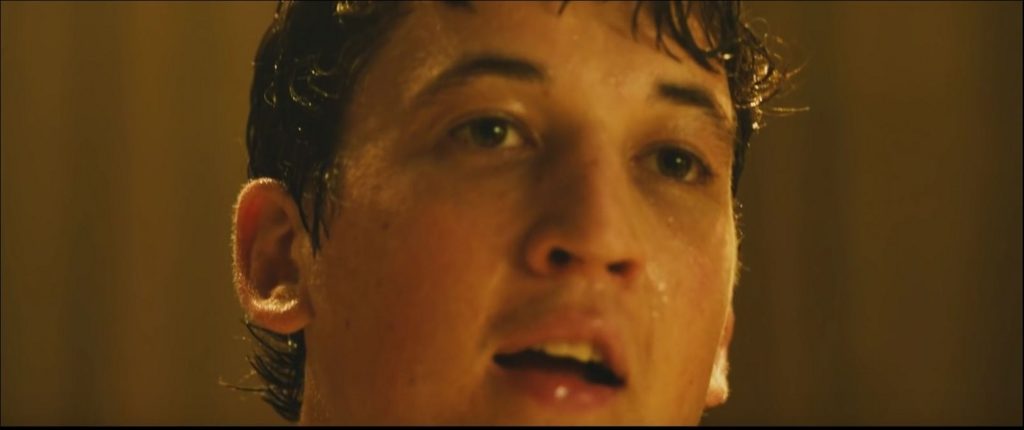
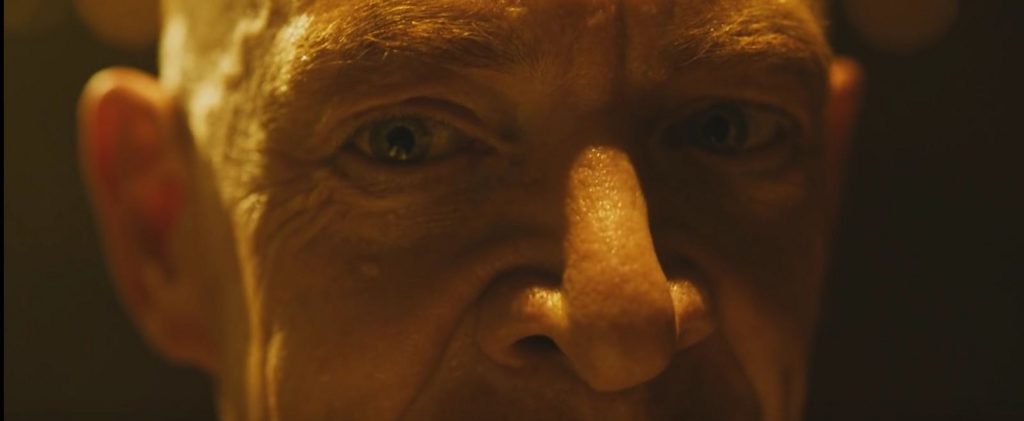
The director is a genius!!!!!!
Ah! Genuinely a wonderful film!!!
Thanks for reading all the way to the end!!
La La Land is a nickname for Los Angeles, mainly the Hollywood area. It also means a state of being intoxicated or high, a dreamland